
Being a caregiver can be deeply meaningful, but it can also be exhausting, isolating, overwhelming, and complicated. Sometimes caregiving comes from love and choice. Sometimes it comes from necessity, obligation, or circumstances you never expected to find yourself in.
Many caregivers are carrying an incredible amount of responsibility with very little support. Some are balancing jobs, finances, medical appointments, medications, and constant decision-making while also living with the quiet fear of: “If I don’t do this, what happens to my person?”
That’s a heavy thing to carry.
And in the middle of all of it, caregivers often push their own needs aside completely. But taking care of yourself isn’t selfish or optional—it’s part of the plan.
I’ve worked with many caregivers over the years, and one thing I’ve consistently noticed is that the people who intentionally make even a small amount of space for themselves tend to cope more sustainably over time. Not because their circumstances magically become easier, but because they’re no longer trying to carry everything alone without any support, rest, or care directed toward themselves.
The Hidden Stress of Caregiving
Caregiving stress is often invisible to the outside world. People may see someone “helping,” but they don’t always see the emotional weight underneath it: the hypervigilance, exhaustion, grief, guilt, and fear of making the wrong decision.
Sometimes caregivers are supporting someone they deeply adore. Sometimes the relationship is more complicated than that. There may be unresolved hurt, strained family dynamics, resentment, or grief for what the relationship used to be—or never was. All of those feelings can exist alongside love and responsibility.
And when those emotions show up, many caregivers judge themselves harshly for having them.
It’s important to remember that difficult feelings don’t make you a bad caregiver. They make you human.
When people are constantly focused on surviving, problem-solving, and caring for someone else, they often stop checking in with themselves entirely. Over time, that level of chronic stress can take a real toll emotionally, mentally, and physically.
Therapy Can Be Part of the Plan
Therapy can be one way to support yourself as a caregiver. It creates space that is just for you—a place where you don’t have to manage someone else’s needs, hold everything together, or pretend you’re okay when you’re not.
For many caregivers, therapy becomes less about “fixing” anything and more about finally having room to breathe.
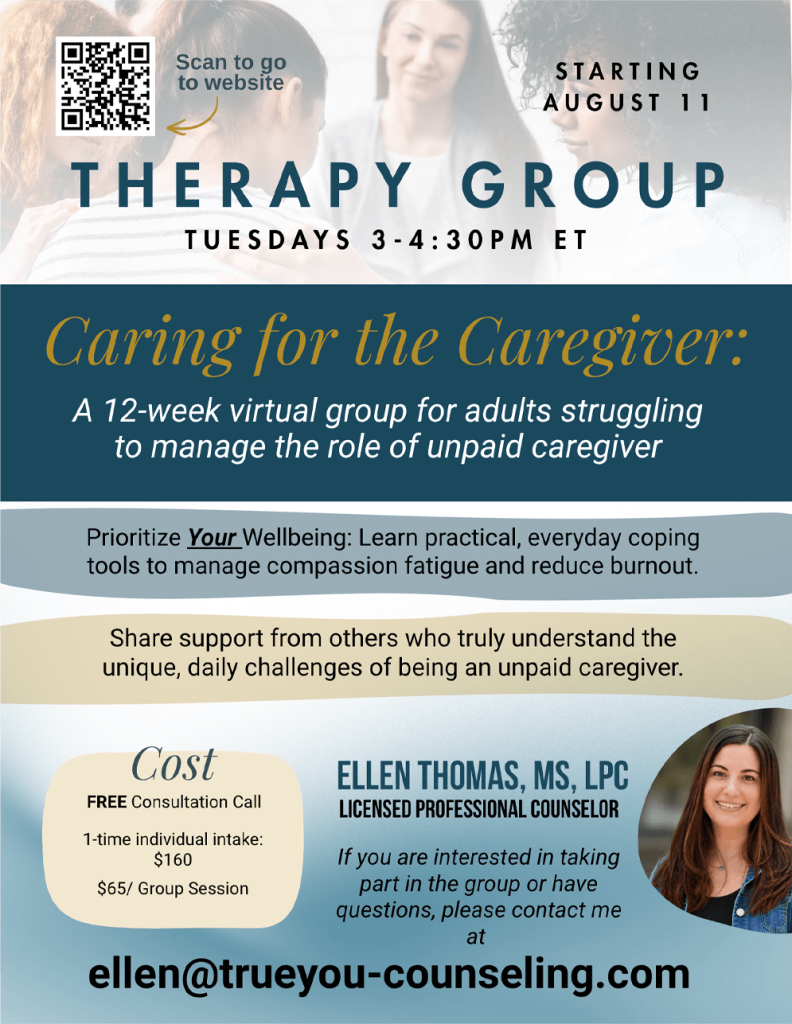
It can help caregivers process grief, guilt, anger, fear, burnout, complicated family dynamics, and the emotional exhaustion that often comes with constantly being needed. Sometimes it’s also one of the only places caregivers feel allowed to say things out loud that they worry other people won’t understand. If you’re curious about therapy, schedule a free consultation here.
But therapy isn’t the only form of support, and if you’re not ready for therapy, or it simply isn’t realistic right now, that doesn’t mean there’s nothing you can do to care for yourself.
6 Small Ways to Take Care of Yourself as a Caregiver
If therapy feels too big, inaccessible, or simply not realistic right now, that’s okay. Support doesn’t have to be all-or-nothing. Sometimes caregiving leaves very little room for yourself, especially when there isn’t anyone else to step in.
Even small moments of care toward yourself still matter.
1. Create small pockets of time for yourself
It doesn’t have to be hours. Even 10–15 minutes to sit outside, listen to music, drink your coffee or eat a meal while it’s still hot, or simply exist without responding to someone else’s needs can help regulate your nervous system.
Small moments count more than people realize.
2. Let someone else in—if you can
Not everyone has a strong support system, and I want to acknowledge that. Some caregivers truly are doing this alone. But if there is someone safe—a friend, support group, neighbor, therapist, or family member—allowing yourself to be supported, even a little, can help lighten the emotional load.
You were never meant to carry everything completely alone.
3. Pay attention to your basic needs
This sounds simple, but it’s often one of the first things caregivers stop noticing.
Have you been eating regularly, getting enough rest, staying hydrated, taking your medications, and stepping outside when you can?
When you’re focused on someone else’s survival or wellbeing, your own needs can start to feel unimportant. But your body still needs care too.
4. Practice setting small boundaries
Boundaries don’t have to be dramatic or life-changing to matter.
Sometimes boundaries look like not answering a non-urgent phone call immediately. Sometimes they look like asking another family member to help with one task. Sometimes they simply look like allowing yourself to rest without earning it first.
Protecting your energy matters.
5. Make space for complicated feelings
You can love someone deeply and still feel overwhelmed.
You can feel grateful and resentful at the same time.
You can care about someone and still grieve how much your life, identity, relationships, or future have changed because of caregiving.
These feelings are more common than people realize, and they deserve compassion—not judgment.
6. Remind yourself that your needs matter too
Taking care of yourself does not take away from the care you give someone else. In fact, it’s often what allows caregiving to remain sustainable over time.
You matter too.
Not just as a caregiver. As a person.
Why This Matters More Than People Realize
I’ve worked with caregivers who were doing everything possible for the person they loved while completely ignoring their own physical and emotional limits. Many were functioning in survival mode for so long that they stopped recognizing how overwhelmed they actually were.
And often, the shift didn’t happen because of one huge life change. It happened because they slowly started giving themselves permission to matter too.
Permission to rest.
Permission to ask for help.
Permission to admit that caregiving is hard.
Permission to acknowledge that they were carrying more than one person should have to carry alone.
Those small shifts matter.
Because caring for yourself isn’t separate from caregiving, it’s what makes caregiving sustainable.
Final Thoughts
Caregiving asks a lot from people—sometimes more than anyone around them fully realizes. And while there can be love and meaning in it, there can also be grief, exhaustion, fear, resentment, loneliness, and overwhelm.
All of those experiences are valid.
Taking care of yourself doesn’t mean you love the person you’re caring for any less. It means you’re acknowledging that your wellbeing matters too.
And whether support looks like therapy, five quiet minutes alone, asking for help, or simply admitting to yourself that this is hard and you deserve support too.
You do not have to earn rest.
You do not have to wait until burnout to care for yourself.
And you were never meant to carry all of this alone.
In the midst of caring for everyone else, you deserve support too. If you’re ready for a space that’s focused on you, let’s start with a conversation. Schedule a free consultation today.